PART II: The Russian Occupation of Chechnya
.png)
.png)
Abductions and collective punishment in occupied Chechnya
Beyond theological dissent, any form of opposition or response to oppression, past or present, is condemned and punished by the regime. An August 2016 report by Human Rights Watch (HRW) provides an overview of the treatment of resistants relatives by the Kadyrov government:
"For the past decade, there have been persistent, credible allegations that while aiming to root out and destroy an aggressive Islamist insurgency in the region, law enforcement and security agencies under Kadyrov’s control have been involved in abductions, enforced disappearances, torture, extrajudicial executions, and collective punishment. The main targets have been alleged insurgents, their relatives, and suspected collaborators."
But the regime doesn’t limit itself to suspected “resistants”, it attacks the population as a whole and targets innocents, including random students and workers. In the year 2025 alone, according to reports by the Turkey-based opposition and digital-resistance organization NIYSO ("Justice" in Chechen), several hundreds innocent young Chechens have fallen victim to the regime and suffered kidnappings at the hands of the authorities. One should also note that these numbers are only the visible part of the iceberg based on reported and documented cases. A big number of abductions hence remains unknown, notably due to the fear that contacting the opposition movements to break the silence implies. While some are sent to Ukraine, others end up in the jail cells of the regime’s dungeons without their families receiving any news, sometimes even after the death of the victims.
Violence reached its peak during the month of April 2025, when 16-year-old Chechen Eskerkhan Khumashev stabbed a member of the occupation forces. In response, the regime answered with one of its most cruel practices : collective punishment. Every male member of his family was forcibly mobilized to Ukraine after severe torture, while the corpse of the young shahîd was publicly exposed by the regime's forces on the ground for several days as a “lesson” given to those who would be inspired by his action to rebel against the regime.
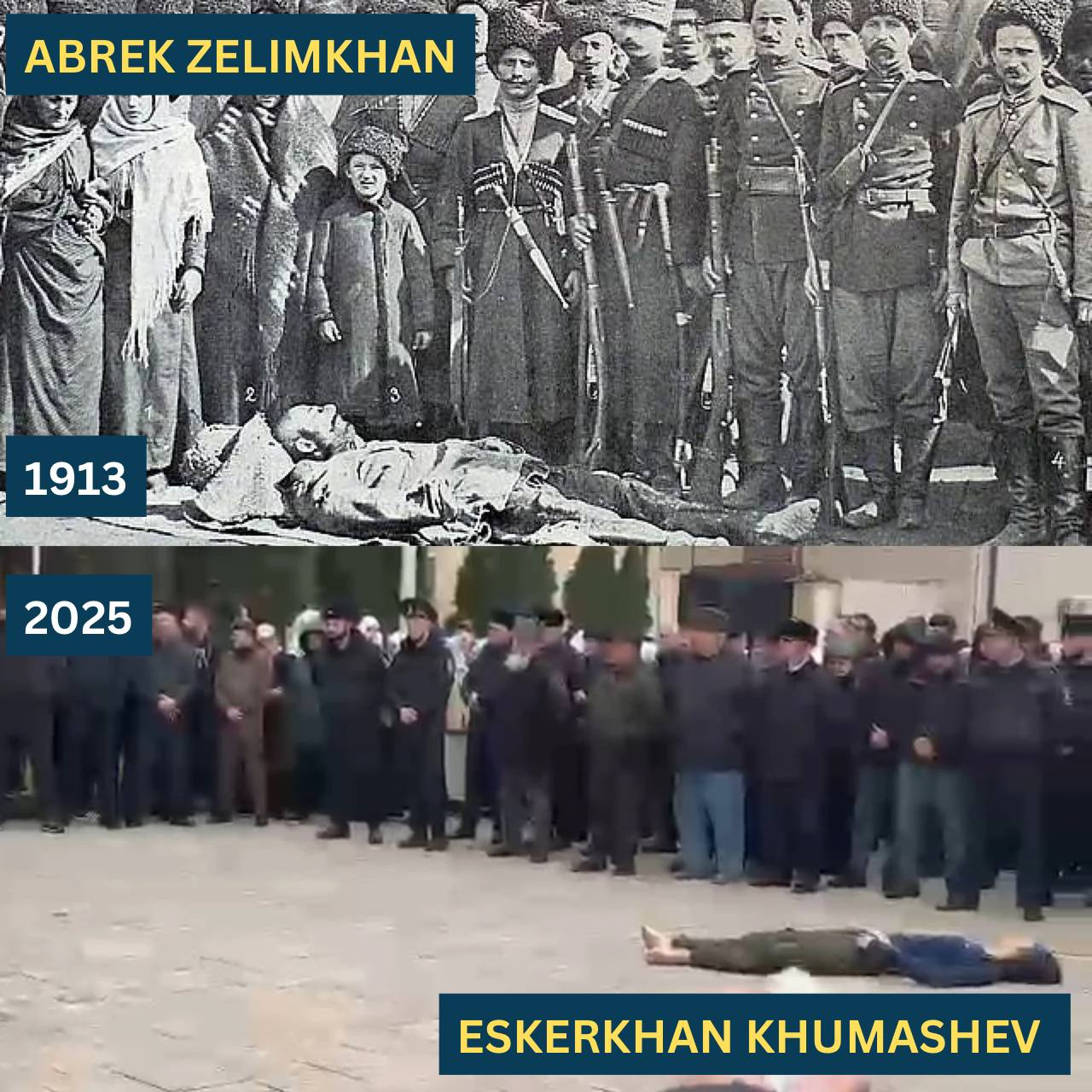
“History repeats itself, especially when it comes to the brutality of occupying regimes. The Russian occupiers are not using the bodies of killed Chechens for intimidation and propaganda for the first time. Let us remember the story of the Abrek Zelimkhan, who fought against the injustice of the Tsarist regime. After his death, the occupiers gathered his relatives, including women and children, and forced them to pose in front of his body. This is not just cruelty; it is a demonstration that even death will not protect your family from humiliation. Decades later, the tactics have not changed: the same cynicism, the same public impunity. The occupiers still believe that terror and public humiliation will break the will of the people. But they are wrong. Each such photograph is not proof of their strength but evidence of their fear. Fear of those who remain symbols of resistance, even in death.” NIYSO says in its Telegram channel.
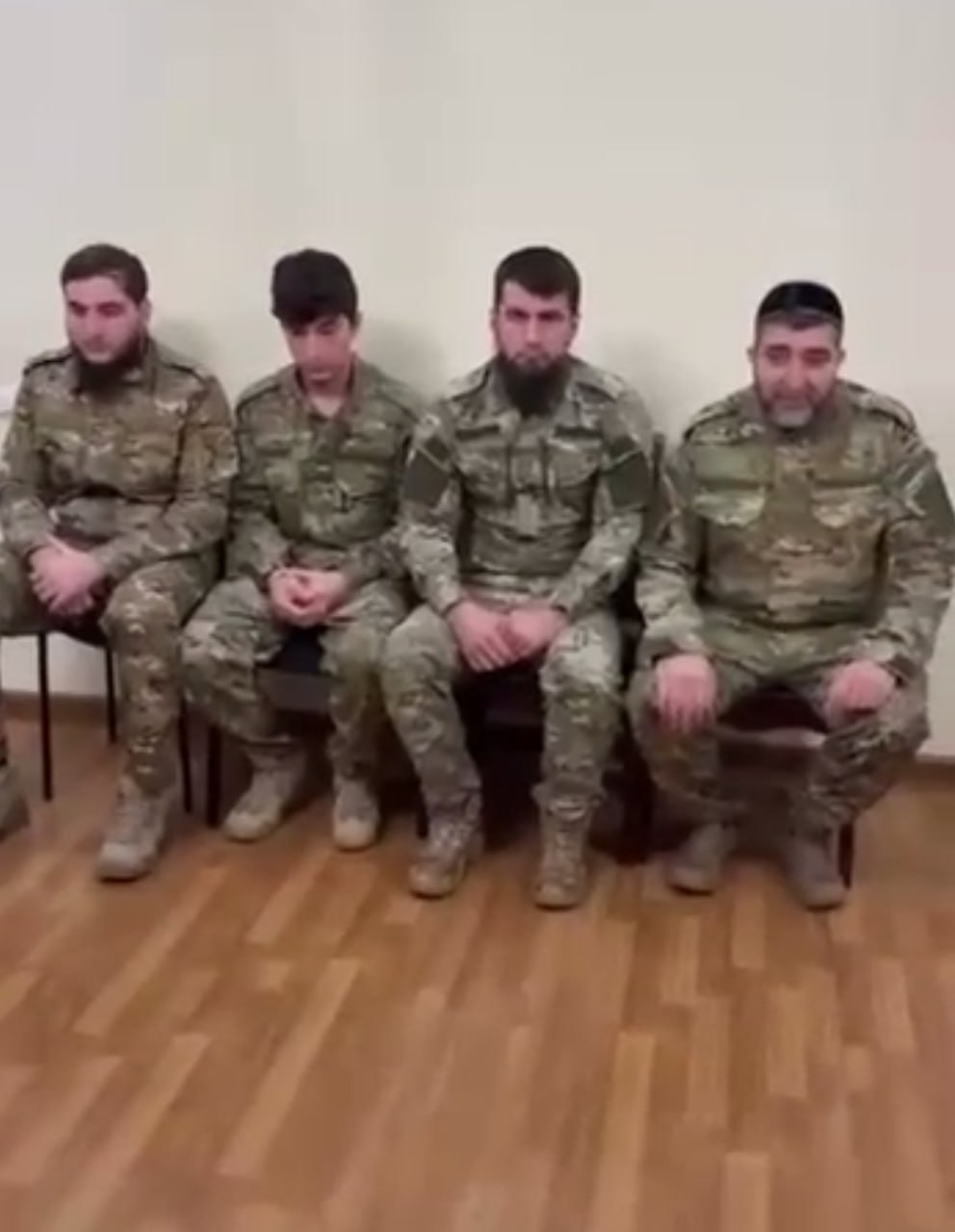
Another terrorist act committed by the FSB in occupied Chechnya was the abduction of four members of the Dadaev family at once, on November, 19.
The innocent Dadaevs were forced to voice in a video the necessary message and place all the blame on their family members. In other words, the ones at fault are not the puppet regime and the FSB, who carry out such repressive actions, but the people who in some way displease them. A brief illustration of the so-called ‘constitutional order’ that Moscow has brought to Chechnya.
During the same month of November, other reports came about the mass abduction by Russian officials of eight members of another family- the Shakhbiyev family from Urus-Martan. The family had not been involved in anything illegal, and one of those abducted is in fact a geography teacher at the local school. Their situation still remains unknown to that day. But one thing is certain: under the leadership of the FSB, the security forces continue their terror against the population of occupied Chechnya.
This practice in occupied Chechnya continues without interruption. Innocent people, including women, are abducted and held for months without any explanation or evidence, submitted to extreme torture including hours-long electrocutions or hangings and crushes on barbed wires. No one within occupied Chechnya - except Kadyrov’s relatives - is protected against these practices, as shown by the case of the 37-years-old Shovda Shamaeva, who was working as a teacher and got tortured to death after she got detained by officers of the Sernovodskoye District Police Department (ROVD). Her body was later returned to her relatives, bearing clear signs of torture.
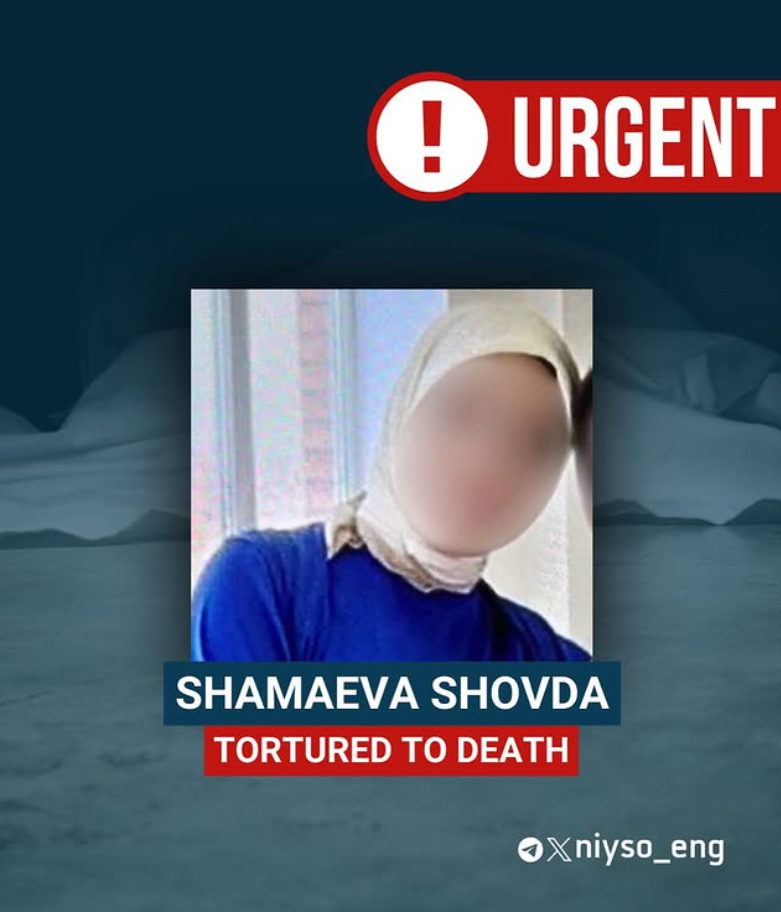
Shovda left behind a 15-year-old son, who must now live with the knowledge that his mother was killed at the hands of those who call themselves “law enforcement officers,” the very people who claim to have saved the Chechen people from “terrorism.”
Without even knowing why, one can go to sleep without any problem, and wake up the next morning by the loud cries of their family after their brother or sister got kidnapped or raided during the night to be sent to fight in Ukraine. The families are thus forced to live in constant fear and uncertainty, expecting the worst. As horrible as it can sound, abduction and torture are no longer an extraordinary event in occupied Chechnya, but an everyday reality that many choose, or are forced to remain silent about.
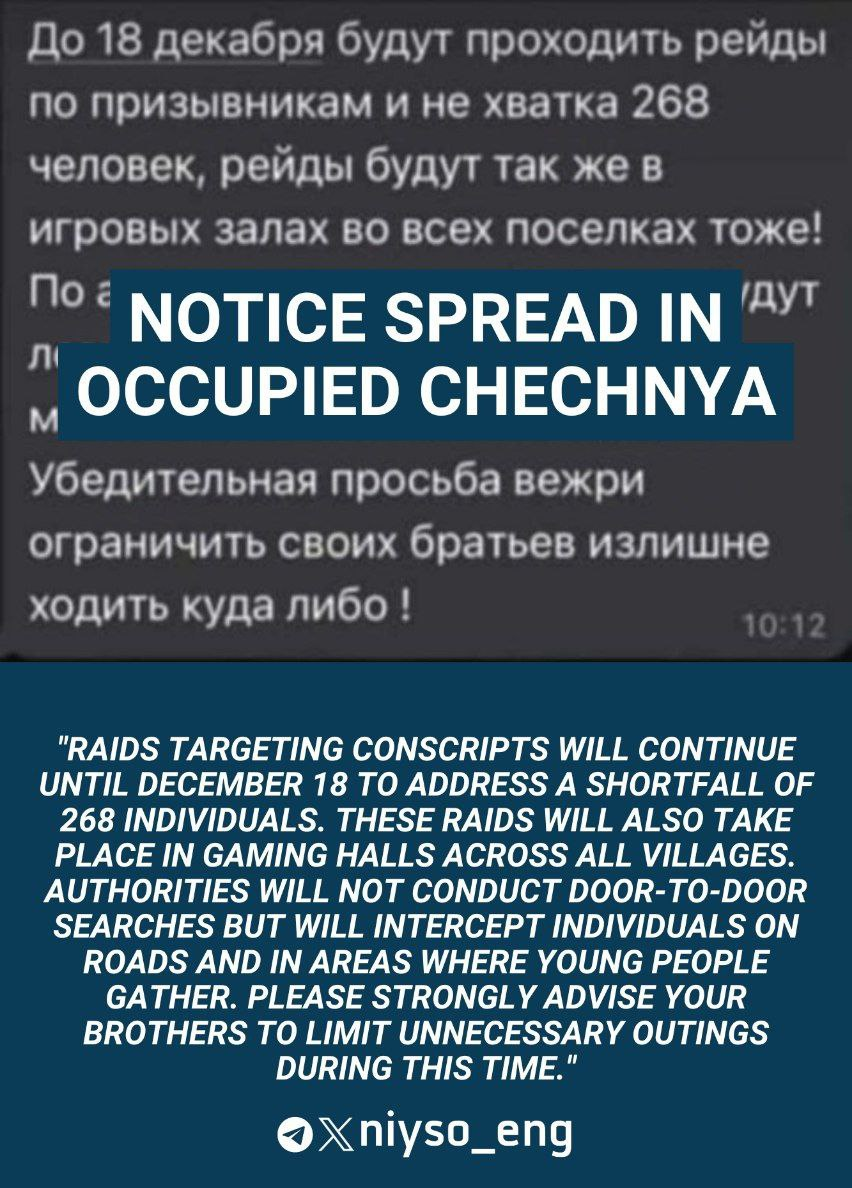
Furthermore, regime agents often act on their own initiative against the inhabitants. The process is predatory: victims are targeted, prohibited substances are planted, and abductions are staged as pretexts for extortion. While drug charges are the most profitable, it is an open secret that the operatives themselves are often regular users. Any abduction triggers a financial bargaining process where guilt is irrelevant. Victims then face a binary choice: pay or face imprisonment and forced deployment to the war. The proceeds follow a strict hierarchy: a significant portion goes to the Kadyrov fund, with the remainder split between district leadership, criminal investigation heads, and operatives. Informants also receive a cut for inciting new abductions. This corrupt model spans all structures, from criminal units to district police, treating ordinary Chechens as either a source of income or expendable material. In other terms, the Chechen people are no longer considered as so by the regime, but as simple tools for war and profits.
Extreme Nepotism
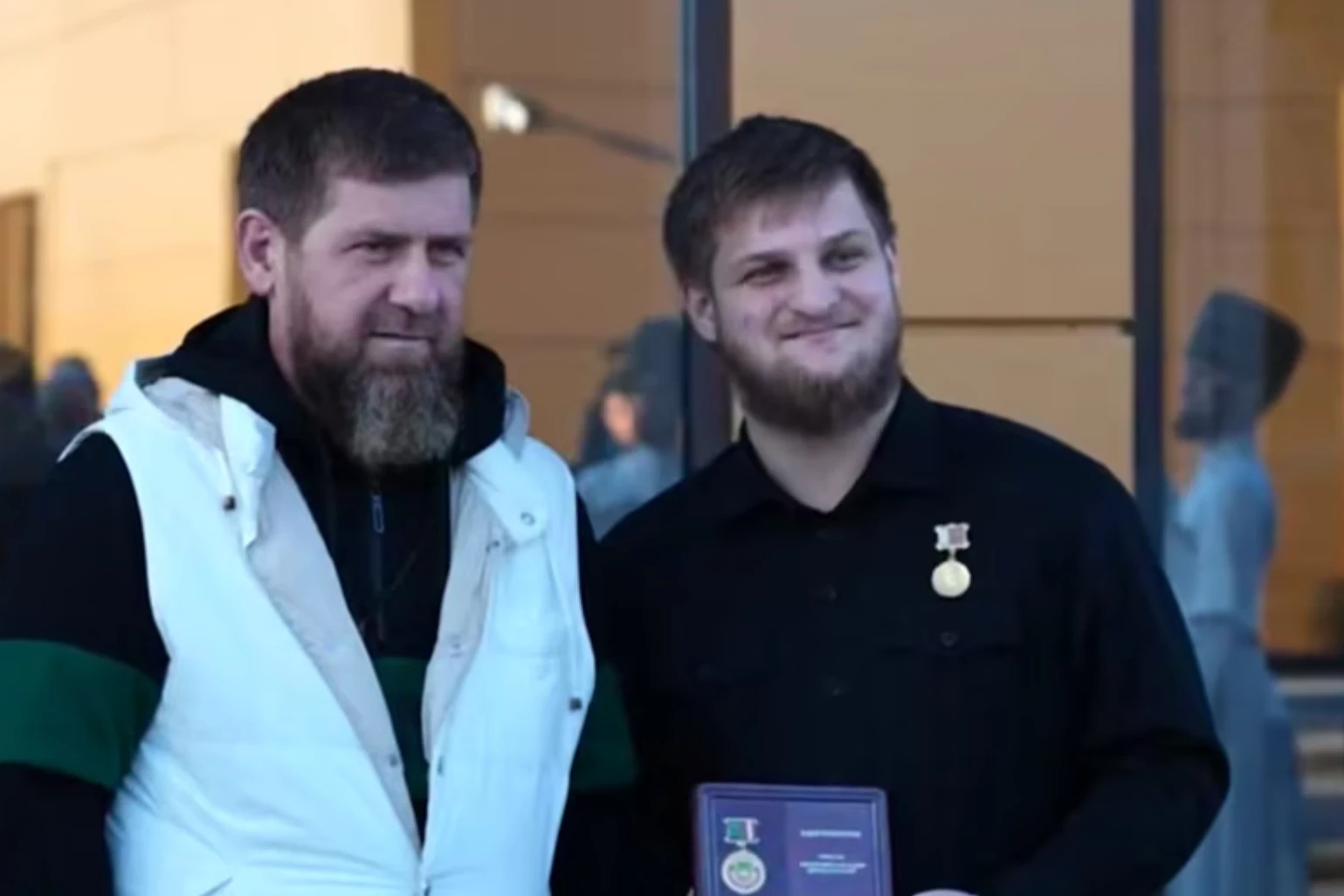
In addition, the citizens of occupied Chechnya are deprived of any possibility of judicial challenge. The regime is structured around hardcore nepotism, and every political-judicial organ is directly controlled by Kadyrov’s close associates, automatically preventing any means of recourse against injustice for victims. For instance, in January 2026, Ramzan Kadyrov appointed his inexperienced 20-year-old son, Akhmat Kadyrov, as acting Deputy Prime Minister. Investigative outlets like Proekt and OC Media estimate that approximately 100 members of the Kadyrov family are linked to positions of power, representing the highest level of nepotism in Russia. Hence, clear trials no longer exist in occupied Chechnya, and both judges and lawyers are constrained to submit to the will of the regime.
Online Surveillance: The Rise of Bloggers and Digital Movements Confronting the Information Blockade
Information circulating in occupied Chechnya is meticulously filtered by regime forces; any initiative in independent journalism is illegal, and the media are centralized under the state apparatus. The muftiates, under the total control of the FSB, continue to disseminate rhetoric intrinsically dictated by the Kremlin and persist in promoting an ideology of servitude and unconditional loyalty to the authorities - justified through religiously colored discourse that is, in reality, profoundly erroneous and instrumentalized in the service of the dictatorship.
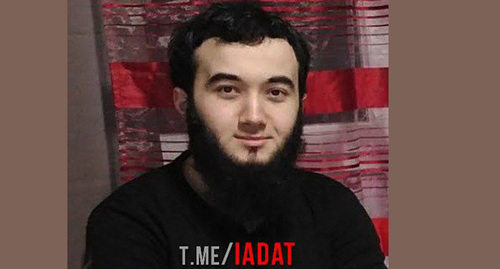
Deprived of any political space in Chechnya, dissent has therefore more generally invested itself in social networks, and, given the development of digital resistance - notably through channels such as 1ADAT and NIYSO - Chechen security services closely monitor comments and posts on Telegram and VKontakte. Any sign of potential disagreement to one of the regime's statements or actions, even minor, can lead to immediate arrest. Thus, cases of abduction because of online activism, even minor or simple suspicions, occurs frequently. One of the most notable of them remains the terrible abduction and filmed rape of Salman Tepsurkayev, accused of being a moderator of the opposition Telegram channel 1ADAT. The movement for instance used to expose and oppose the occupation through anonymous actions such as street-renaming actions in Chechnya.
Researcher Harold Chambers explains in his thesis Tactical Evolutions of Modern Chechen Resistance:
"1ADAT’s actions renaming streets have taken place in Grozny and around the North Caucasus. This tactic is meant to erase how the regime has honored individuals who fought against the Chechens, such as General Gennady Troshev and Akhmat Kadyrov, changing the names to memorialize heroes of Chechen independence, like Dzhokhar Dudaev and Khamzat Gelaev. (…) It is also a dramatic show of hatred toward the regime, burning one of the regime’s most common symbols(…)" (Chambers, p.53).
To make matters worse, residents are constantly subjected to pressure and arbitrary checks; a practice that has recently intensified, particularly in the context of the development of digital resistance, consists of the outright inspection of individuals’ mobile phones during checks, to verify that no photos, videos, or subscriptions to opposition pages are present.
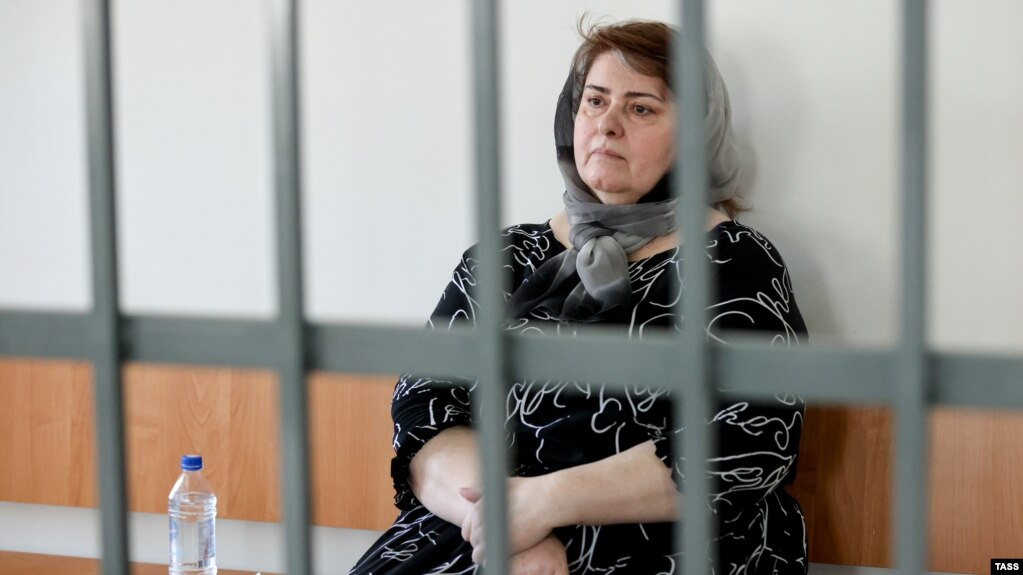
The population is intimidated to the extreme. A single comment, a "like," or a message in a group chat can result in abduction, torture, and forced public apologies or even to death. Every digital action is weighed against the risk of physical harm. Another prominent example is Zarema Musayeva, the mother of the Chechen human rights lawyer, Abubakar Yangulbayev, who was taken from Nizhny Novgorod in early 2022 and forcibly transferred to Chechnya where she was imprisoned under heavy charges, officially because of her son’s activism. She still remains in the regime's dungeons to that day.
As a result, many within occupied Chechnya, as well as within the diaspora (formed following the mass exile to European countries caused by the wars of the 1990s and 2000s), have chosen silence under the constraint of terror combined with an overestimation of the regime’s actual capabilities, fueled by the paranoia generated by cases of abduction. With no information circulating and no means of contacting any media outlets or human rights defenders, the regime succeeded in assembling the ideal conditions to maintain oppression in the most complete impunity on its population. Nevertheless, there remain voices that continue to openly contest the occupation and fight for freedom, despite severe repression.
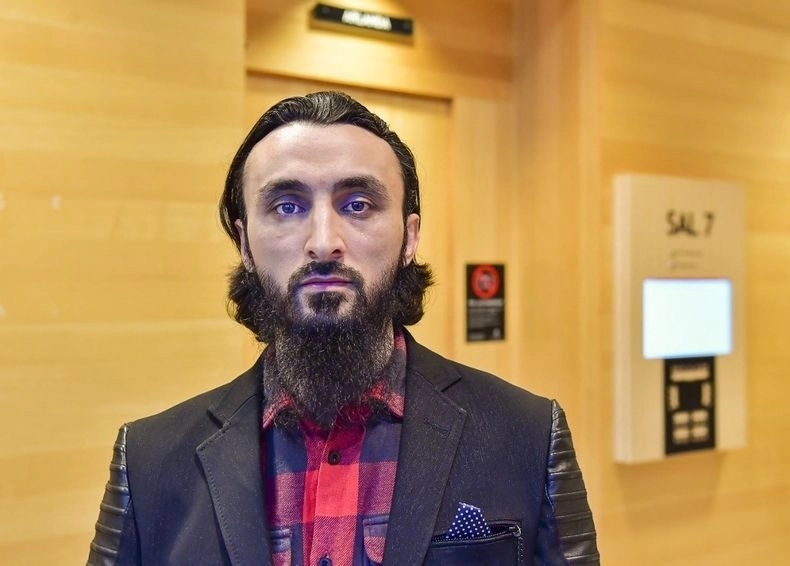
Given that hardcore surveillance within the borders of occupied Chechnya, this resistance has naturally developed itself especially on foreign soil. Figures such as Tumso Abdurakhmanov, based in Sweden, have gained considerable influence by using YouTube to denounce the regime’s abuses and to deconstruct, among other things, its religious rhetoric. He, like other critical figures such as Khassan Khalitov (also active on YouTube and designated as “ foreign agent” by Russia), has acquired significant influence and has been among the first figures to seriously stand as an alternative to the regime’s extreme censorship - to the point of drawing the regime’s wrath. For good reason: these bloggers succeeded in breaking the information monopoly long held by Grozny TV, thereby attracting direct threats from the FSB and the regime’s underlings. As a result of the new configuration of resistance which shifted from structured armed struggle to the digital front and from outside of occupied Chechnya, surveillance has gradually extended to the digital activities of the diaspora.
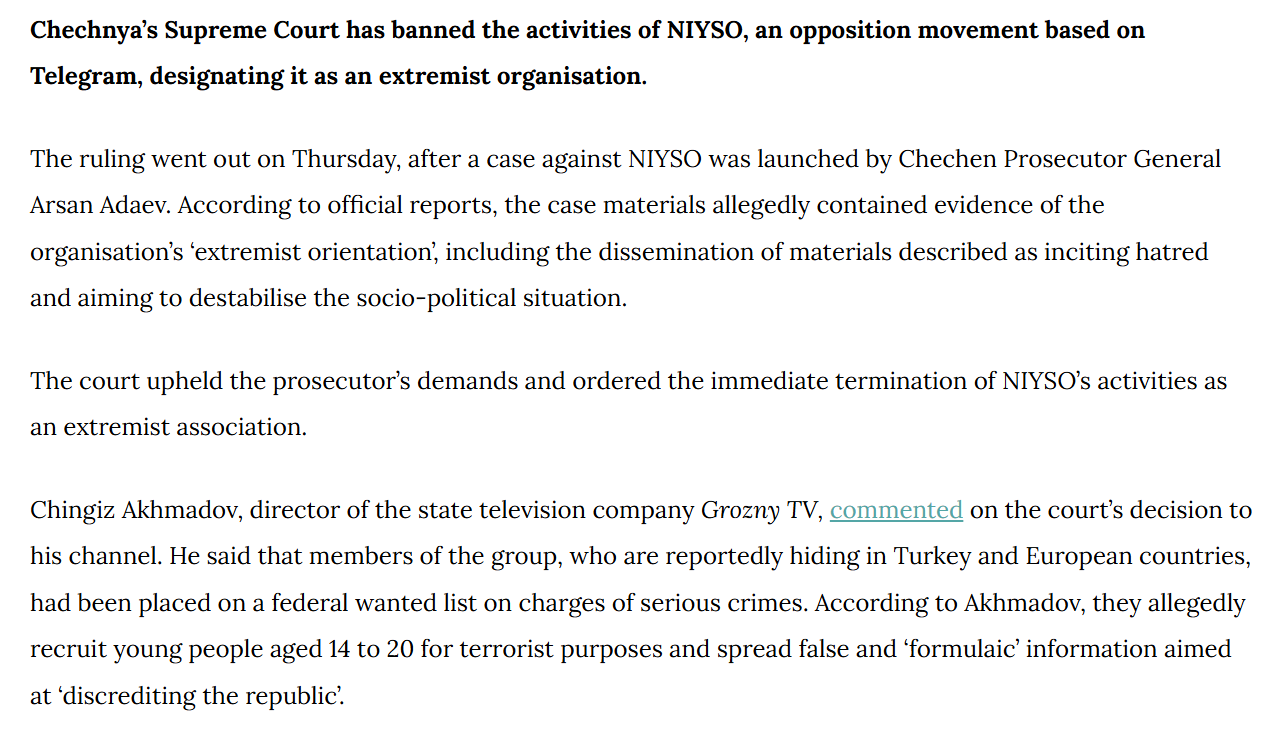
NIYSO was even designated an "extremist" organization and was officially judged as “illegal” by the Supreme Court of Chechnya in October 2025. Following the collective punishment doctrine of the Kadyrov system, relatives of NIYSO activists were publicly humiliated in mosques, beaten, and forcibly deported to neighboring Ingushetia. According to information channels NIYSO and Kavkaz.Realii, approximately 20 civilians were abducted by security forces in the village of Alkhan-Kala on the sole day of January 9, 2026, under similar charges of extremism.
Transnational Repression: Terror Without Borders
Since 2009, a series of assassinations has struck figures within the diaspora across the continent. These operations are systematically overseen by Russian intelligence services and are distinguished by the explicit use of extreme violence. For reasons such as having been a war veteran, liking the wrong post or comment on Instagram, or expressing criticism of the regime’s authorities, the latter may simply decide - if the criticism gains too much traction - to kill whomever they wish on foreign territory.
This was notably the fate suffered by former resistance commander Zelimkhan Khangoshvili. Assassinated in broad daylight in the Tiergarten park in Berlin in August 2019 by a Russian agent named Vadim Krasikov, it was quickly discovered that the murder had been ordered directly by Vladimir Putin himself.
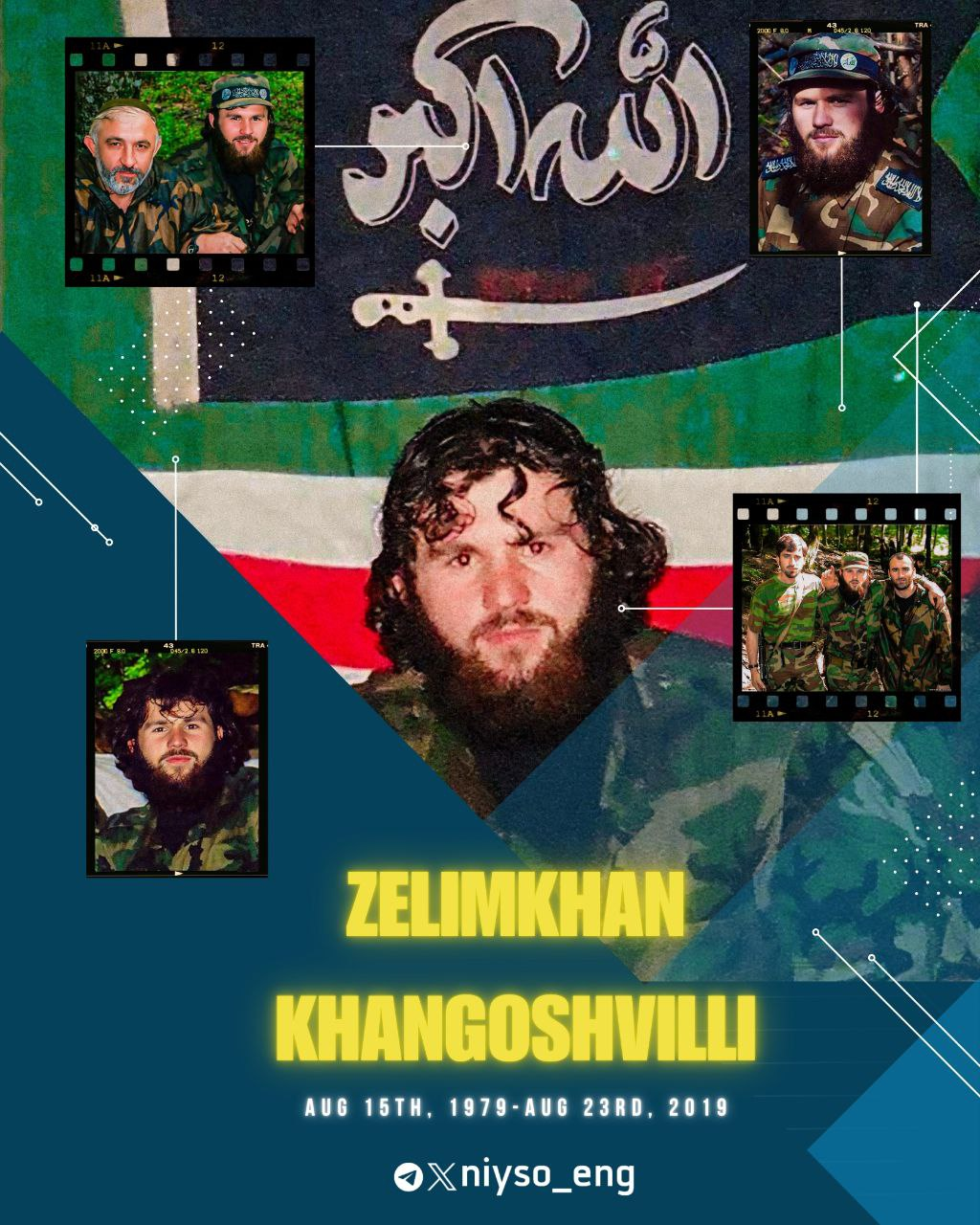
As if that were not enough, a highly controversial prisoner exchange took place between the West and the Kremlin in August 2024, which concluded with Krasikov’s release; he returned to Moscow as a hero, greeted and welcomed on a red carpet. The exchange - that took place between the United States, European countries, and Russia - proved how the rule of law and the judicial system in a modern state have proven to be less of a priority than the political interests of the country's leadership. It turns out that one can commit murders and espionage on European soil, and then, safely, in front of the entire world, return to their home country, where they will be greeted with bouquets and awards. Krasikov became a hero and patriot for Russia because of the 'Chechen question,' which has troubled Russia for so many years. Everything related to the war in Chechnya has become deeply personal and principled for Putin and the current regime, to the extent that they were willing to undertake such a 'historic exchange.'
By meeting Krasikov at the airplane's steps, Putin demonstrated how much he values those who are loyal to his directive to 'wipe them out even in the toilet.' This reveals his personal tragedy and weakness: Chechen resistance.
Regime critics also constitute prime targets. Murdered in January 2020 by a regime agent with 137 stab wounds, Imran Aliyev was targeted because of his virulent criticism of the regime on social media. Tumso Abdurakhmanov, mentioned earlier, has also been the victim of numerous assassination attempts, the most recent dating back to February 2020 in Gävle, Sweden, where he managed to overpower his attacker. Following the incident, he was placed under the protection of Swedish security forces. At the end of 2022, he was informed of a new assassination attempt planned against him and managed to stage his own death for nearly three months in order to thwart the regime’s plans.
Through these attacks, the regime’s intention is clear: the authorities aim precisely to paralyze the diaspora through fear and to silence those who use their little freedom in Europe to denounce oppression.
Moreover, the regime’s use of collective punishment against families as a primary tool of intimidation is not limited to Chechnya’s borders. It constitutes the main weapon of Kadyrov’s forces against active members of the diaspora. When a member of the diaspora publicly criticizes the regime, their parents, siblings, cousins or grandparents back home are abducted, tortured or publicly humiliated on state television to force the opponent into silence. For example, Kadyrov publicly threatened to exterminate the entire Yangulbaev family, labelling its members “accomplices of terrorists.”
This strategy creates an unbearable moral dilemma for exiled Chechens, who find themselves torn between continuing the political struggle at the cost of their loved ones’ lives, or submitting to silence.
The Asylum Dilemma in Europe: Between Security and Human Rights
To control the diaspora from within, the Kremlin even goes so far as to rely on levers such as the infiltration of European security services. Indeed, Moscow is suspected of manipulating information flows towards European intelligence agencies in order to portray its political opponents as potential terrorists. This thereby complicates their asylum procedures and can potentially lead to the deportation of innocent individuals from Europe to occupied Chechnya.
Chechen refugees in Europe thus find themselves in a situation of extreme precarity, caught between the threat posed by Kadyrov and the tightening of European migration policies.
In recent years, part of the European political class and security services has developed a suspicious approach toward the diaspora as a whole. This stigmatization is actively encouraged by Kadyrov’s propaganda, which seeks to portray any dissident as a religious extremist in order to facilitate their expulsion to Chechnya. Many Chechens are hence denied asylum or lose their refugee status due to “S” alerts or suspicions of radicalization, often based on deliberately truncated information provided by the Russian authorities via Interpol. This situation places opponents in a legal grey zone, making them deportable to a country where they face nothing but the risk of torture and death.
Several EU member states, including France, Germany and Poland have notably carried out expulsions of Chechen nationals to Russia and have thereby participated in a policy of impunity , despite repeated warnings from human rights organizations. The principle of non-refoulement, a cornerstone of international refugee law and a pillar of the domestic policies of Western states, is increasingly circumvented in the name of national security.
Several cases of expulsions of Chechen nationals further illustrate the extreme risks incurred during forced returns to Russia, risks that had until then been ignored by Western authorities :
Apti Nazjujev, a former activist involved in the resistance movement against the Kadyrov regime, was deported to Russia in 2011 following the rejection of his application for international protection by Norway. On 18 May 2013, his family announced that he was missing, and on 10 June 2013, he was found dead in a river. The Norwegian newspaper Ny Tid stated that the autopsy of his body revealed that he had been tortured to death.
In 2015, Kana Afanasev was sent back to Russia following the rejection of his asylum application by Sweden on the grounds that he had not provided proof of a risk of persecution in Chechnya. Upon his return to Russia, he was arrested by the police and died a few days later in detention. Various reports on his case indicate that his death was caused by torture using electric shocks.
According to Human rights organization Memorial, France deported 18-year-old asylum seeker, Daoud Muradov, on 11 December 2020, in violation of the principle of non-refoulement. Daoud Muradov told his lawyer that upon his arrival at Sheremetyevo Airport he was met by FSB officers who then forcibly took him to the woods, where they stripped him naked, beat him, poured cold water over him, tied electric wires to his legs and genitals and electrocuted him. Under torture, he was forced to sign a “confession” to a terrorism-related crime that he said he had never committed. Based on Daoud Muradov’s “confession,” he was placed in pre-trial detention by court order and held in a detention facility in Moscow. In July 2021, he was charged with three additional terrorism-related offenses. In November 2021, Daoud Muradov was transferred to the Chechen capital, where he was tortured in the Staropromyslovsky police department. On 6 February 2022, Daoud Muradov’s family members were informed that he had died in a Grozny hospital, where he had been taken from a pre-trial detention facility (SIZO), allegedly due to “sudden heart failure.” Daoud’s body was never returned to his relatives.
In October 2025, German authorities (Bandenburg) forcefully deported twelve of Zelimkhan Khangoshvili’s members to Georgia. The group included Zelimkhan’s brother, Zurab, and several children. The deportation occurred just over a year after Germany released Zelimkhan’s assassin, illustrating the depth of the impunity in which German services drown. Human rights organizations argue that the family remains in grave danger in Georgia due to the heavy presence of Russian intelligence and the historical precedent of assasination attempts against the family in Tbilissi (notably the 2015 attempt on Zelimkhan).
These tragedies demonstrate not only the ineffectiveness of diplomatic and legal guarantees in such procedures, but also the close complicity between Western and Russian security services against Chechens.
What prospects lie ahead? What future can one hope for a people whose pure and simple erasure seems to align with the agenda of the world’s great powers?
Chechens are caught in a vise: on one side, they are trapped by the blood-soaked dictatorship imposed by the Kremlin in Chechnya, and on the other, the occupation-regime’s transnational threats combined with the objective complicity of Western states in the deportation of innocent Chechen refugees. The Chechen people find themselves in a climate of generalized ignorance and impunity. Today, it is possible to witness the genocide of a Muslim people in almost total silence. Young people can be kidnapped, tortured, deported and killed without any international reaction. Stripped of all human consideration, the oppressed are left with no voice to rely on other than that of activists and digital resistance movements within their own diaspora.
How can the chains of oppression be broken?
History has shown us, particularly the one of the Chechen people, that no empire is eternal, and even less so those led by the Russians. Whether in 1917, with the fall of the Russian Empire, or in 1991 with the disintegration of the Soviet Union, Chechens have always taken up arms when the opportunity arose to defend their freedom and confront the colonizer.
Russia, despite appearances, is fragile. Like every empire before it, the Federation will fall. Its structural dependence on the vertical power embodied by Putin, combined with the evolution of political dissent, allows for the hope of a profound post-Putin reconfiguration of the federal structure, potentially leading to the disintegration of the state, similar to what occurred in 1917. Such a scenario would, in time, deprive Kadyrov’s puppet regime of the support and resources needed to suppress a popular uprising. In shâ’ Allâh, this could pave the way for insurrection and independence. Conversely, another possible scenario (may Allâh protect us from it) would be the consolidation of the Russian Unitary State through the seizure of power by a member of the Putinist caste, backed by an unprecedented intensification of repression orchestrated by the Rosgvardiya (National Guard) and the FSB all over Russia and its occupied territories. Uncertainty still prevails, and Allâh is the All-Knowing.
In any case, our duty remains to stand firm on the path of struggle. It is upon us to continue denouncing the oppression in occupied Chechnya, and at the very least, to raise awareness for those who have been stripped of their voices, and for whom there is no one but us left to speak. Endorsing the resistance of the muslimîn in Chechnya by speaking the truth about their situation, and constraining the oppressors by revealing their true face to those they used to fool: words are today the last and most important weapons we, from our places, have left to break the chains.
Last words
Today, by forcibly sending entire generations to serve the Russian war machine, the regime seeks to rid itself of those who might eventually take part in a potential future insurrection. In other words, it prefers to destroy lives and entire families for the sake of its own perpetuity, with no regard for Islâm and the people. Yet by tearing dozens of thousands of sons from their mothers, brothers from their sisters, and fathers from their children, it is precisely the opposite process from the one the regime intends that takes place: where the tyrant believes he is subduing through oppression, he is in fact shaping traumatized and determined generations, living for nothing other than taking their ultimate revenge and defeating the colonizer.
REFERENCES
Books & Blog Sources:
- VATCHAGAEV, Maïrbek. L’Aigle et le Loup : La Tchétchénie dans la guerre du Caucase au XIXe siècle. Paris : Buchet-Chastel, 2008.
- NEKRICH, Aleksandr M. The Punished Peoples: The Deportation and Fate of Soviet Minorities at the End of the Second World War. New York : W. W. Norton & Company, 1978.
- WERTH, Nicolas. « The “Chechen Problem”: Handling an Awkward Legacy, 1918–1958 ». Contemporary European History, vol. 15, n° 3, Cambridge University Press, 2006.
- VATCHAGAEV, Mairbek. Chechnya: The Inside Story. From Independence to War. Londres : Open Books, 2019.
- AKHMADOV, Ilyas et LANSKOY, Miriam. The Chechen Struggle: Independence Won and Lost. Préface de Zbigniew Brzezinski. New York : Palgrave Macmillan, 2010.
Web Sources:
About NIYSO and Activism
- Faith, resistance, and digital advocacy: Niyso’s role in Chechen activism https://oc-media.org/faith-resistance-and-digital-advocacy-niysos-role-in-chechen-activism/
- Chechnya’s Supreme Court designates opposition movement Niyso as an extremist organisation https://oc-media.org/chechnyas-supreme-court-designates-opposition-movement-niyso-as-an-extremist-organisation/
- Chechen family forcibly sent to fight in Ukraine, Niyso says https://oc-media.org/chechen-family-forcibly-sent-to-fight-in-ukraine-niyso-says/
- Telegram channel: NIYSO https://t.me/niysoo
The Rebranding
- The Mufti of Chechnya called the invasion of Ukraine a ‘war for the prophet and Islam https://www.kavkazr.com/a/muftiy-chechni-nazval-vtorzhenie-v-ukrainu-voynoy-za-proroka-i-islam/31727640.html
- Chechen Mufti treats his fellow countrymen's involvement in Ukrainian conflict as jihad https://www.eng.kavkaz-uzel.eu/articles/58364/
The Grozny Conference & Diplomacy
- “Who Are Ahl-Al-Sunnah?” https://share.google/I4uqQ6fzcBueS4IBM
- Chechnya’s paradiplomacy 2000–2020: The emergence and evolution of external relations of a reincorporated territory Link to Cambridge Core PDF
History and Memory
- The wounds of the 1944 deportation still fester in Chechnya and beyond https://www.aljazeera.com/opinions/2025/2/23/the-wounds-of-the-1944-deportation-still-fester-in-chechnya-and-beyond
- 'There Was No Water, No Food' -- Chechens Remember Horror Of 1944 Deportations https://www.rferl.org/a/chechen-deportation-1944-survivors/25273614.html
- Dealing with a Violent Past and its Remnants in the Present: The Challenges of Remembering the Wars in Chechnya in the Chechen Diaspora in the EU (09/2023)
Ruslan Kutaev
- Political prisoner Ruslan Kutaev released from Chechen penal colony https://www.eng.kavkaz-uzel.eu/articles/41836
- Russian authorities designate Chechen activist and former Ichkherian official as foreign agent https://oc-media.org/russian-authorities-designate-chechen-activist-and-former-ichkherian-official-as-foreign-agent/
Zarema Musaeva
- Верховный суд Чечни смягчил на полгода приговор Зареме Мусаевой — матери оппозионеров Янгулбаевых https://www.kavkazr.com/a/verhovnyy-sud-chechni-naznachil-zareme-musaevoy-pyatj-let-kononii-poseleniya/32589421.html
- Supreme Court Of Chechnya Mitigates Prison Sentence Of Opposition Bloggers' Mother https://www.rferl.org/a/chechnya-prison-sentence-opposition-bloggers-mother/32589664.html
Insurgency and Resistance in the North Caucasus
- Tactical Evolutions of Modern Chechen Resistance (Harold Chambers) - Thesis https://dspace.ut.ee/server/api/core/bitstreams/ad039bb6-fbb4-460e-8110-8f116caa88e0/content
- The North Caucasus Insurgency (Jean-François Ratelle) https://www.taylorfrancis.com/chapters/edit/10.4324/9781315798318-10/north-caucasus-insurgency-jean-fran%C3%A7ois-ratelle
- The North Caucasus Insurgency: Dead or Alive? https://scispace.com/pdf/the-north-caucasus-insurgency-dead-or-alive-4pkuvmoar4.pdf
On Tumso Abdurakhmanov
- Chechen blogger Tumso Abdurakhmanov: Sweden court sentences pair for hammer attack on critic of Ramzan Kadyrov https://www.theguardian.com/world/2021/jan/11/chechen-blogger-tumso-abdurakhmanov-sweden-court-sentences-pair-hammer-attack-critic-ramzan-kadyrov
- Chechen blogger claims he staged own death to fool Kadyrov https://oc-media.org/chechen-blogger-claims-he-staged-own-death-to-fool-kadyrov/
Human Rights & Legal Reports
- Russia: Human rights violations in the Chechen Republic (EUR 21/7346/2023) https://www.amnesty.org/es/wp-content/uploads/2023/10/EUR2173462023ENGLISH.pdf
- Rapport Dublin : Les demandeurs d'asile tchétchènes face à la procédure https://www.sciencespo.fr/ecole-de-droit/sites/sciencespo.fr.ecole-de-droit/files/Rapport_Dublin_Habitat-Cite%20_Sciences%20Po%20Paris_2019.pdf
- Germany deports relatives of Chechen commander assassinated by Russian operatives in Berlin https://oc-media.org/germany-deports-relatives-of-chechen-commander-assassinated-by-russian-operatives-in-berlin/